
LTL Cargo from Dubai to GCC
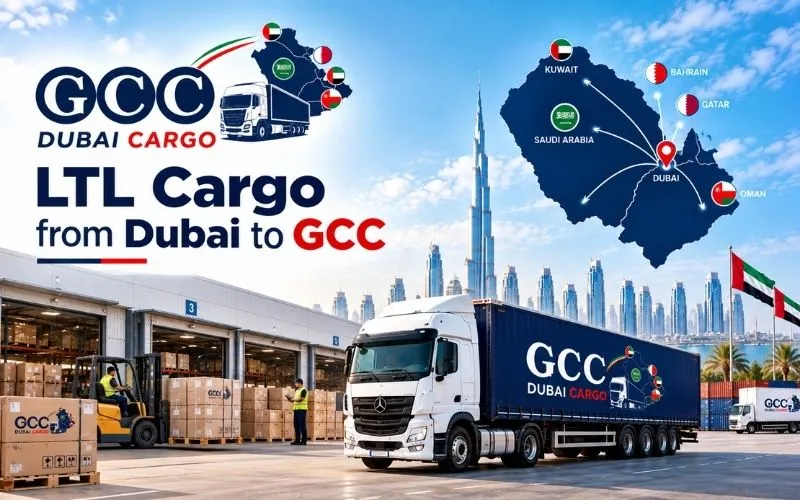
Sending a shipment from Dubai to another GCC country does not always mean reserving an entire truck. If your cargo occupies only part of a vehicle, LTL cargo from Dubai to GCC can be a practical way to move smaller or partial shipments by road.
LTL, or Less Than Truckload, allows cargo to travel as part of a consolidated load rather than requiring one customer to use the whole truck.
This option can be useful for businesses sending stock, retailers moving several pallets, suppliers delivering goods to customers, or individuals transporting furniture and personal belongings.
The right choice depends on the cargo’s size, weight, dimensions, destination, handling requirements and delivery conditions.
For customers arranging GCC transportation from Dubai, understanding how LTL works before requesting a quotation can make the shipping process much easier.
What LTL Cargo from Dubai to GCC Means
LTL stands for Less Than Truckload. In simple terms, it means your shipment does not require the entire truck.
Instead of arranging a dedicated vehicle for one shipment, available truck space can be shared between compatible consignments. Each shipment occupies part of the available capacity.
This makes LTL different from FTL, or Full Truckload transportation.
With FTL, one customer generally uses a dedicated truck for the shipment. With LTL, cargo is consolidated with other shipments according to the transportation arrangement.
The important point is that LTL is not simply about sending a “small box.” A shipment can include cartons, pallets, furniture, commercial inventory or other goods while still being considered for a partial-load transportation arrangement.
The actual suitability depends on the cargo details and transportation requirements.
How Shared Truck Space Works
The basic LTL concept is straightforward:
- Cargo details are provided.
- The shipment is assessed according to weight, dimensions, volume and cargo type.
- Pickup requirements are considered.
- The cargo is prepared for transportation.
- Suitable shipments can be consolidated for road movement.
- The consolidated cargo moves toward its destination.
- Individual shipments are separated or delivered according to the planned arrangement.
Because several shipments may share transportation capacity, customers do not necessarily need to pay for an entire dedicated truck when their cargo only occupies part of the available space.
However, consolidation can also mean additional handling compared with a dedicated FTL movement. This is one reason customers should consider the nature of their goods before choosing LTL.
When LTL Is a Better Choice Than FTL
LTL can make sense when the shipment is too large for ordinary parcel delivery but does not justify a complete truck.
Typical examples include:
- Several cartons of business stock
- A few pallets of retail products
- Office equipment
- Furniture and household belongings
- Spare parts
- Packaged commercial goods
- Small quantities of industrial materials
- Partial supplier shipments
FTL can become more appropriate when the shipment occupies a substantial amount of truck capacity, requires dedicated transportation, has strict handling requirements, or needs a vehicle arranged specifically around one shipment.
There is no universal weight or volume point at which every shipment should switch from LTL to FTL. The decision should consider the complete shipment rather than one measurement alone.
What Types of Cargo Can Be Considered for LTL?
LTL road transportation can be relevant to several different cargo categories.
Household Cargo
Individuals may need to move:
- Sofas
- Beds
- Tables
- Cabinets
- Mattresses
- Appliances
- Household cartons
- Personal belongings
Furniture should be measured before transportation is arranged. Large items can create access and loading issues even when their overall shipment volume appears reasonable.
Fragile household goods also need appropriate protection because consolidated transportation can involve more handling than a dedicated truck movement.
Commercial Cargo
Businesses commonly have shipments that are too substantial for parcel services but too small to justify an entire truck.
Examples include:
- Retail inventory
- Business stock
- Office supplies
- Packaged products
- Spare parts
- Equipment
- Wholesale goods
- Supplier deliveries
For commercial shipments, accurate descriptions and quantities are particularly important because documentation should correspond with the actual goods being transported.
Bulky and Heavy Cargo
Some partial shipments can contain large or heavy individual items.
Examples may include:
- Machinery
- Industrial equipment
- Large furniture
- Construction-related materials
- Heavy commercial items
A shipment should not automatically be classified as suitable for ordinary LTL simply because its total quantity is small. Individual dimensions, weight, loading method and vehicle requirements can affect the transportation arrangement.
Fragile Cargo
Glass, electronics, appliances and furniture with delicate surfaces require additional preparation.
Customers should communicate unusual or fragile items before pickup rather than assuming they can be handled like standard cartons.
How LTL Cargo Moves From Dubai to a GCC Destination
A typical LTL shipment begins with accurate cargo information.
The customer provides the pickup location, destination, cargo type, approximate weight, dimensions and quantity. Additional details may be required depending on the goods.
The pickup location is then assessed for practical access.
After cargo preparation and loading, the shipment enters the road transportation process. For cross-border movements, applicable export, transit and import procedures must also be considered.
At the destination, the cargo can proceed toward its residential, commercial or warehouse delivery point according to the agreed arrangement.
The exact process can vary by cargo type, destination and shipment requirements.
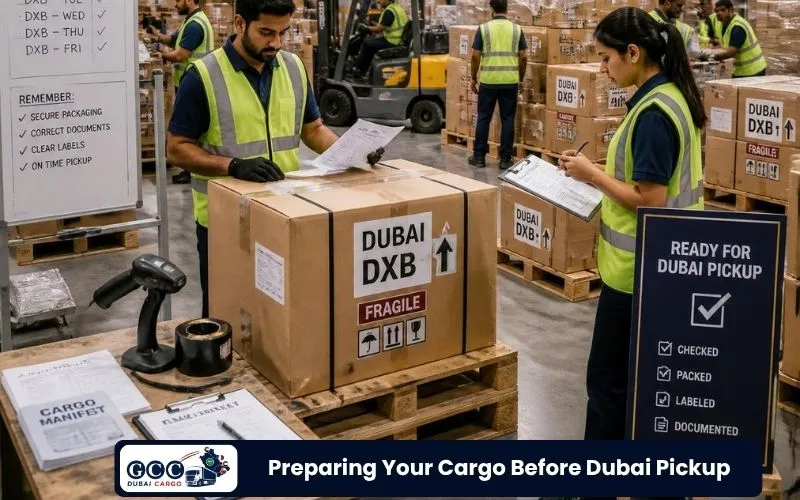
Preparing Your Cargo Before Dubai Pickup
Good preparation starts before the truck arrives.
Create a basic cargo inventory showing:
| Information | Why It Helps |
|---|---|
| Cargo Type | Identifies what is being transported |
| Quantity | Shows the number of packages/items |
| Weight | Helps assess transportation requirements |
| Dimensions | Important for bulky or irregular items |
| Pickup Address | Helps assess collection access |
| Delivery Address | Helps plan final delivery |
| Photos | Useful for unusual or oversized cargo |
| Packing Condition | Helps determine preparation needs |
Large furniture and irregular items should be measured individually.
If you are unsure about the weight of an item, provide your best available estimate and clearly identify it as an estimate.
Photos can also be useful when an item has unusual dimensions, fragile surfaces or difficult loading requirements.
Packing and Labeling for LTL Cargo
Packing is particularly important when cargo travels as part of a consolidated load.
Use suitable cartons, protective materials or other appropriate packaging for the goods.
Furniture should be protected against scratches and surface damage. Breakable items should be individually protected and clearly identified.
Where several cartons belong to the same shipment, consistent labeling can help identify them during handling.
Before pickup, check that:
- Cartons are properly closed
- Fragile items are protected
- Loose components are secured
- Furniture surfaces are protected
- Packages are clearly identified
- The cargo inventory matches the actual shipment
The exact packing method should reflect the type of goods being transported.
Dubai Pickup Considerations for LTL Cargo
The cargo itself is only one part of the pickup.
The physical access to the Dubai collection location can affect loading.
For example, customers living in apartment buildings may need to check:
- Service elevator availability
- Elevator size
- Building management requirements
- Parking access
- Loading bay availability
- Security access
- Stairs
- Distance between parking and the building
For villas, offices and warehouses, customers should consider vehicle access and the available loading area.
A large sofa might fit inside a room but still fail to pass through a doorway or elevator.
For businesses, warehouse loading bays and site access should be confirmed in advance.
For broader local transportation requirements, customers can also review the available cargo services in Dubai before arranging their GCC shipment.
Documents and Customs for GCC LTL Shipments
Cross-border cargo requires more planning than domestic transportation.
The documents required can vary according to:
- Destination country
- Cargo type
- Product
- Commercial or personal nature
- Shipment value
- Applicable regulations
- Import requirements
Depending on the shipment, documentation may include a commercial invoice, packing list, transport documents, certificate of origin or other applicable paperwork.
Product-specific permits or approvals may also apply to certain goods.
Customers should ensure that shipment descriptions, quantities and supporting documents are consistent.
Do not assume that every shipment needs exactly the same documentation. Requirements should be confirmed for the specific cargo and destination before dispatch.
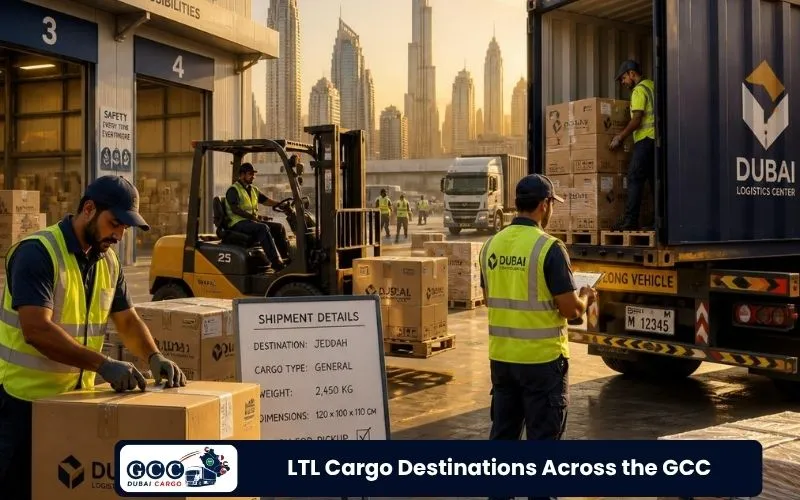
LTL Cargo Destinations Across the GCC
LTL transportation from Dubai can be relevant to all major GCC destinations, but each route has its own practical considerations.
LTL Cargo from Dubai to Saudi Arabia
Saudi Arabia is an important destination for both commercial and personal cargo moving from Dubai.
Businesses may send retail stock, supplies, equipment or spare parts, while individuals may need to transport furniture and personal belongings.
Major destinations can include Riyadh, Jeddah, Dammam, Khobar, Mecca, Medina, Jubail, Yanbu and Taif.
The delivery environment can vary considerably between a residential address, commercial facility, warehouse or industrial site.
For customers requiring more route-specific information, see cargo from Dubai to Saudi Arabia.
LTL Cargo from Dubai to Oman
Oman is another important road-freight destination from Dubai.
The shipment may be destined for a home, business, warehouse or commercial location.
Customers sending furniture should consider access at the receiving address, while commercial shippers should prepare accurate cargo descriptions and documentation.
For route-specific information, see cargo from Dubai to Oman.
LTL Cargo from Dubai to Qatar
LTL can be relevant for businesses that need to send partial commercial shipments rather than reserve an entire truck.
Before dispatch, the sender should confirm the cargo details, receiving party information and destination requirements.
A warehouse delivery can have different access requirements from a residential delivery, so the final address should be provided accurately.
More information is available through cargo from Dubai to Qatar.
LTL Cargo from Dubai to Bahrain
For Bahrain-bound cargo, the shipment may include commercial goods, household belongings, furniture or other suitable road cargo.
Customers should provide complete pickup and delivery information and clarify whether the destination is residential, commercial or warehouse-based.
For more destination-specific guidance, visit cargo from Dubai to Bahrain.
LTL Cargo from Dubai to Kuwait
Kuwait can be suitable for commercial and personal shipments that do not require an entire dedicated truck.
Because cross-border transportation involves documentation and customs procedures, customers should prepare shipment information before collection.
For more route-specific information, see cargo from Dubai to Kuwait.
What Affects LTL Cargo Cost?
LTL pricing depends on the characteristics of the individual shipment.
Important factors can include:
- Cargo weight
- Cargo volume
- Package dimensions
- Number of pieces
- Destination
- FTL or LTL requirement
- Pickup conditions
- Loading requirements
- Packing requirements
- Residential or commercial delivery
- Vehicle requirements
- Heavy or oversized items
- Customs-related requirements
- Special handling requirements
This is why providing only “I have 500 kg” may not be enough for an accurate quotation.
Two shipments with the same weight can occupy very different amounts of space.
For a better quote request, provide the cargo type, quantity, approximate weight, dimensions, pickup location, destination and any unusual access or handling requirements.
Common LTL Shipping Problems and Practical Solutions
Problem: Cargo dimensions were not provided
Solution: Measure large and irregular items before requesting a quotation.
Problem: The pickup building has restricted access
Solution: Confirm parking, loading areas, elevator arrangements and building-management requirements before pickup.
Problem: The receiver’s address is incomplete
Solution: Provide the complete delivery address and receiver contact information.
Problem: The shipment contains fragile items
Solution: Identify fragile goods before pickup and use suitable protective packaging.
Problem: Documents do not match the shipment
Solution: Check descriptions, quantities and shipment information before dispatch.
Problem: Furniture cannot pass through the elevator
Solution: Measure furniture, doorways and elevator dimensions before transportation.
Problem: Cargo contains an unusually heavy item
Solution: Provide the item’s approximate weight and dimensions in advance so the transportation requirements can be assessed.
Information to Provide When Requesting an LTL Quote
A useful quotation request should contain enough information to understand the shipment.
Try to provide:
- Pickup location in Dubai
- Destination country and city
- Delivery address, if available
- Cargo description
- Number of cartons, pallets or individual items
- Approximate total weight
- Dimensions of large items
- Photos of unusual cargo
- Commercial or personal shipment type
- Preferred pickup information
- Any loading or access restrictions
- Receiver information
- Available shipment documents
The more complete the information, the easier it is to assess the appropriate transportation arrangement.
LTL Shipment Preparation Checklist
Before the shipment is collected, check the following:
Cargo
- Cargo inventory prepared
- Quantities checked
- Weight estimated
- Large items measured
- Unusual cargo photographed
Packing
- Cartons secured
- Fragile items protected
- Furniture protected
- Loose parts secured
- Packages labeled
Pickup
- Address confirmed
- Parking checked
- Loading area confirmed
- Elevator requirements checked
- Building access confirmed
Destination
- Delivery address confirmed
- Receiver details confirmed
- Commercial/warehouse access checked
- Unloading requirements communicated
Documents
- Invoice checked where applicable
- Packing list prepared where applicable
- Cargo description reviewed
- Destination-specific documents checked
- Product-specific approvals confirmed where applicable
Is LTL Suitable for Your Shipment?
LTL is worth considering when your cargo needs road transportation but does not require the capacity of an entire dedicated truck.
It can be particularly useful for partial commercial shipments, retail inventory, furniture, personal belongings and other cargo where sharing available truck capacity makes practical sense.
FTL may be more appropriate when the shipment is large, requires dedicated capacity, needs specific handling or occupies a substantial portion of the vehicle.
The best choice should be based on the actual cargo rather than simply choosing the cheapest-looking option.
Before requesting a quotation, gather your shipment details, measure large items, check pickup access and confirm the destination information.
For GCC Dubai Cargo, the goal should be to match the transportation approach to the customer’s actual shipment requirements rather than treating every cargo movement in the same way.
Frequently Asked Questions
LTL means Less Than Truckload. It is a road-freight approach where a shipment uses part of the available truck capacity rather than requiring an entire dedicated truck. It can suit smaller commercial shipments, household belongings, furniture and other suitable partial loads.
LTL can be suitable when your shipment does not require an entire truck. FTL may be preferable when the cargo occupies significant vehicle capacity, requires dedicated transportation or has handling requirements that make shared transportation unsuitable.
Provide the pickup location, destination, cargo description, number of pieces, approximate weight, dimensions of large items, photos where useful, shipment type and any loading or delivery-access requirements. Complete information helps the shipment requirements to be assessed more accurately.
They may be suitable depending on their size, weight, packing condition, handling requirements and destination. Large furniture should be measured in advance, and fragile belongings should be properly protected before collection.
Documentation depends on the destination, cargo type and whether the shipment is personal or commercial. Depending on the circumstances, documents may include a commercial invoice, packing list, transport documents, certificate of origin or product-specific approvals. Requirements should be confirmed for the actual shipment before dispatch.
Made Easy
GCC Cargo Destinations
Fast, secure, and reliable cargo delivery from Dubai to GCC countries.
Let's help you!
Need reliable cargo delivery from Dubai to GCC? Get in touch with our team today.
WhatsApp Now
+971 55 735 4528
© 2026 GCC Dubai Cargo. All Rights Reserved.