
FTL Cargo from Dubai to GCC
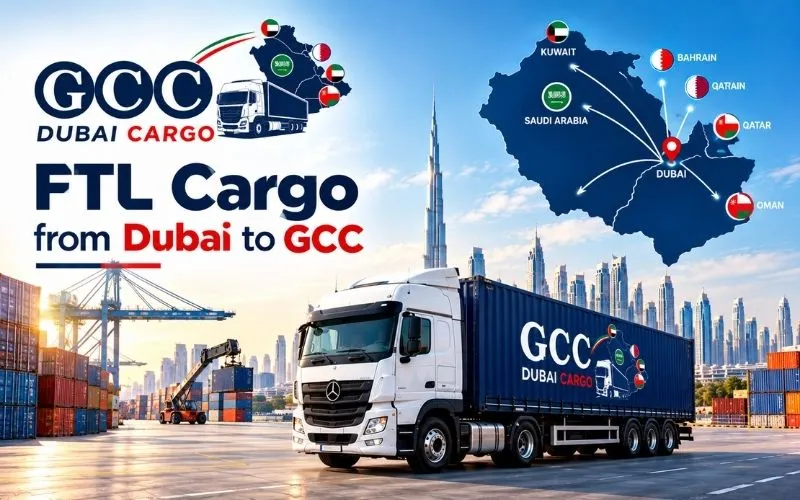
When you need to move a large shipment from Dubai to another GCC country, FTL Cargo from Dubai to GCC can be a practical option. Full Truckload (FTL) means the truck is arranged primarily for one shipment or one customer’s cargo instead of sharing available truck space with several smaller shipments.
FTL road transportation can be useful for businesses moving commercial stock, warehouse goods, equipment, furniture, heavy items, or larger quantities of cargo from Dubai to Saudi Arabia, Oman, Qatar, Bahrain, or Kuwait.
The right FTL arrangement depends on the cargo size, weight, loading requirements, destination, documentation, customs requirements, and delivery location. Planning these details before pickup can make the shipment easier to organize and reduce avoidable delays.
GCC Dubai Cargo provides cargo transportation solutions from Dubai for different shipment requirements, including road freight, full truckload cargo, door-to-door delivery, heavy cargo, and other GCC cargo services.
What Is FTL Cargo from Dubai to GCC?
FTL stands for Full Truckload. In an FTL shipment, a truck is allocated mainly for a customer’s cargo rather than combining the shipment with multiple unrelated consignments.
This can be suitable when the shipment is large enough to require substantial truck capacity or when the customer prefers a more direct transportation arrangement.
FTL cargo can be considered for:
- Large commercial shipments
- Warehouse stock
- Household and office relocation cargo
- Machinery and equipment
- Heavy or bulky goods
- Palletized cargo
- Multiple cartons or packages
- Furniture and fixtures
- Industrial materials
- Project-related cargo
The exact truck and transportation arrangement should be selected according to the shipment’s dimensions, weight, loading method, cargo type, and destination.
FTL vs LTL Cargo from Dubai
One of the most important decisions when arranging road cargo is whether to use FTL or LTL.
FTL — Full Truckload
FTL is generally suitable when the shipment requires a significant portion of a truck’s available capacity or when a dedicated transportation arrangement is preferred.
LTL — Less Than Truckload
LTL is generally used when the shipment does not require a full truck and can be transported together with other compatible shipments.
The better option depends on your shipment rather than simply choosing the service with the name that sounds faster or cheaper.
For example, a business moving a large quantity of stock from a Dubai warehouse to a GCC distributor may consider FTL. A customer sending a smaller number of boxes may find LTL more appropriate.
When Should You Choose FTL?
FTL can make sense when your shipment is large, bulky, sensitive, or needs a dedicated transportation arrangement.
You may want to consider FTL if:
- Your cargo occupies substantial truck space
- You have many cartons or pallets
- Your shipment contains heavy items
- You are moving warehouse stock
- You are relocating an office
- You have furniture or household goods
- Your cargo needs special loading arrangements
- You want to avoid combining your shipment with unrelated cargo
- Your delivery location requires planned unloading
- The shipment contains equipment or bulky items
The important point is to assess the complete shipment before selecting the transportation method.
Types of Cargo That Can Be Considered for FTL
Household and Personal Cargo
FTL can be useful for larger household moves from Dubai to GCC destinations.
A household shipment may include:
- Sofas
- Beds
- Tables
- Chairs
- Cabinets
- Appliances
- Boxes
- Personal belongings
- Office furniture
- Household equipment
For apartment or villa pickup, access should be considered before loading. Narrow entrances, elevators, stairs, parking restrictions, and building loading areas can affect the pickup process.
Commercial Cargo
Businesses may use FTL for moving stock between warehouses, stores, offices, suppliers, and customers.
Commercial shipments can include:
- Retail stock
- Packaged products
- Office equipment
- Furniture
- Spare parts
- Manufacturing materials
- Construction-related goods
- Business inventory
Providing accurate cargo information helps determine the appropriate transportation arrangement.
Heavy and Bulky Cargo
Heavy cargo requires additional planning because weight is not the only consideration. Dimensions, loading equipment, cargo shape, packaging, and access can also affect transportation.
Examples may include:
- Machinery
- Industrial equipment
- Large furniture
- Metal products
- Equipment components
- Oversized packages
If the cargo has unusual dimensions or requires special handling, these details should be communicated before the shipment is arranged.
Fragile Cargo
Fragile items require proper packing and careful loading.
Glass items, furniture with delicate surfaces, electronics, fixtures, and other sensitive goods should be prepared according to their characteristics.
Good cargo preparation can reduce the risk of damage during handling and road transportation.
FTL Cargo from Dubai to Saudi Arabia
Saudi Arabia is an important GCC destination for cargo originating in Dubai. Businesses and individuals may need transportation to different cities depending on their delivery requirements.
Potential destinations include:
- Riyadh
- Jeddah
- Dammam
- Khobar
- Mecca
- Medina
- Jubail
- Yanbu
- Taif
Saudi shipments require proper planning because the final destination, cargo type, documentation, customs requirements, and delivery location can all affect the transportation process.
For route-specific information, visit:
Cargo from Dubai to Saudi Arabia
For commercial shipments, it is especially important to prepare accurate cargo and documentation details before transportation begins.
FTL Cargo from Dubai to Oman
Oman is another major GCC destination for road cargo from Dubai.
FTL can be considered for larger shipments heading to locations such as Muscat, Sohar, Salalah, and other areas depending on the delivery requirement.
Before arranging the shipment, customers should provide:
- Cargo type
- Number of packages
- Weight
- Dimensions
- Pickup location
- Delivery location
- Cargo value where required
- Available shipping documents
You can learn more about the route here:
FTL Cargo from Dubai to Qatar
Qatar is another GCC destination where businesses may require road transportation from Dubai for commercial and personal cargo.
FTL may be appropriate for larger shipments, warehouse stock, office equipment, furniture, and other cargo requiring substantial truck capacity.
For Qatar shipments, the delivery address should be provided accurately. Residential and commercial locations can have different unloading requirements.
More route information is available here:
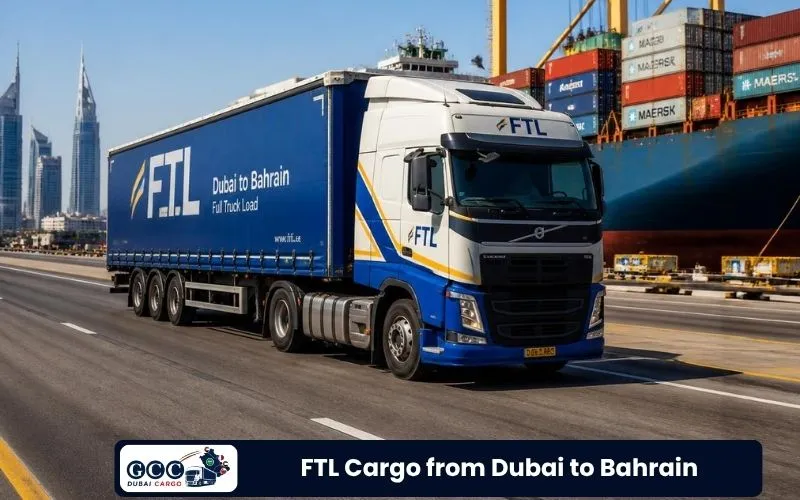
FTL Cargo from Dubai to Bahrain
Businesses and individuals shipping larger cargo from Dubai to Bahrain can consider full truckload transportation when the shipment size and requirements make it suitable.
Cargo may include household goods, commercial stock, furniture, equipment, and other properly prepared shipments.
The pickup and delivery details should be reviewed in advance, particularly when the destination is a residential building, warehouse, commercial property, or industrial location.
Read more about the route:
FTL Cargo from Dubai to Kuwait
Kuwait is also served by GCC road cargo transportation from Dubai.
FTL can be useful for businesses moving larger quantities of goods or customers transporting a substantial shipment that may require most of a truck’s available capacity.
The shipment should be properly packed, documented, and prepared for loading before transportation.
For route-specific information:
Planning Your Dubai Pickup
A successful FTL shipment starts with a well-planned pickup.
The pickup location could be:
- Apartment
- Villa
- Office
- Warehouse
- Shop
- Factory
- Loading bay
- Commercial building
Customers should mention any access limitations before pickup.
For example, an apartment building may have restrictions on truck access or loading hours. A warehouse may have a specific loading bay. An office may require coordination with building management.
Useful pickup information includes:
- Complete pickup address
- Building or warehouse details
- Floor number
- Elevator availability
- Loading bay availability
- Parking or vehicle access
- Cargo location inside the property
- Required loading assistance
- Preferred pickup date
Providing this information early helps create a more practical transportation plan.
How to Prepare Cargo for FTL Transportation
Proper preparation is an important part of road cargo transportation.
Before pickup, organize the shipment and separate items according to type, size, weight, and handling requirements.
Consider the following:
Check the Cargo Quantity
Prepare a clear list of cartons, pallets, furniture pieces, equipment, or other packages.
Record Weight and Dimensions
Weight and dimensions help determine the transportation requirements.
For large or irregular cargo, accurate measurements are especially important.
Use Suitable Packaging
Choose packaging according to the cargo. Fragile products may require additional protection, while heavy equipment may need secure positioning.
Take Cargo Photos
Photos can provide a useful visual record of the shipment before loading.
Label Packages
Clear labels can make identification and unloading easier, particularly when a shipment contains many packages.
Documentation and Customs Preparation
International GCC road cargo requires proper documentation. The exact documents can vary depending on the cargo, shipment type, origin, destination, and applicable customs requirements.
Depending on the shipment, documents may include:
- Commercial invoice
- Packing list
- Certificate of origin
- Identification or shipment details
- Product-related documents where applicable
- Customs documentation
Businesses should make sure the information across their documents is accurate and consistent.
Incorrect descriptions, missing information, or incomplete documentation can create avoidable problems during customs processing.
Because requirements can vary by shipment and destination, customers should confirm the documents required for their particular cargo before dispatch.
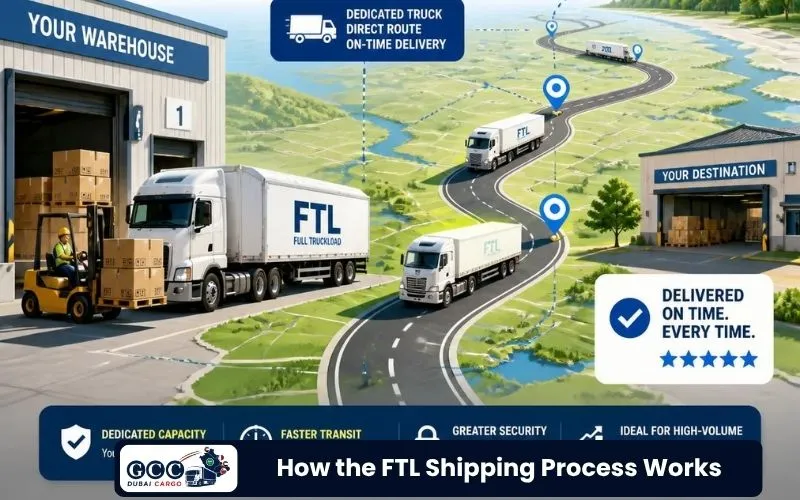
How the FTL Shipping Process Works
A typical FTL shipment can be organized through several stages.
1. Share Shipment Details
Provide the cargo type, quantity, dimensions, weight, pickup address, delivery address, and any special requirements.
2. Review Transportation Requirements
The shipment information can then be reviewed to determine what type of FTL arrangement is appropriate.
3. Prepare Cargo
Pack and organize the cargo before the planned pickup.
4. Pickup in Dubai
The cargo is collected from the agreed Dubai location, subject to the access and loading conditions.
5. Documentation and Customs
Required documentation and customs procedures are handled according to the shipment and destination requirements.
6. Road Transportation
The cargo moves by road toward the GCC destination.
7. Destination Delivery
The shipment is delivered to the agreed destination, where unloading arrangements should already be considered.
What Affects FTL Cargo Cost from Dubai to GCC?
FTL pricing is not based on one fixed factor. Several shipment details can influence the overall transportation cost.
Important factors include:
- Destination country
- Exact delivery location
- Cargo weight
- Cargo volume
- Cargo dimensions
- Number of packages
- Truck capacity required
- Cargo type
- Loading requirements
- Unloading requirements
- Packaging requirements
- Customs requirements
- Special handling requirements
- Pickup and delivery access
- Additional services required
For this reason, requesting a quote with complete shipment information is more useful than asking only for a general FTL price.
Common FTL Shipping Problems and How to Avoid Them
Problem: Incorrect Cargo Information
If the actual shipment is significantly different from the information provided, transportation planning can become difficult.
Solution: Provide accurate weight, dimensions, quantity, and cargo descriptions.
Problem: Difficult Building Access
Apartment towers, offices, and commercial buildings may have access restrictions.
Solution: Confirm parking, loading areas, elevators, access times, and building requirements before pickup.
Problem: Poor Packaging
Weak packaging can increase the possibility of damage during handling.
Solution: Use packaging suitable for the cargo and secure loose items before loading.
Problem: Missing Documents
Incomplete documentation can create problems during international transportation and customs processing.
Solution: Prepare the required shipment documents before dispatch and verify the information carefully.
Problem: Unclear Delivery Location
A general city name is not always enough for final delivery planning.
Solution: Provide the complete destination address and any useful delivery instructions.
FTL Cargo for Businesses in Dubai
FTL can be particularly useful for companies that regularly move larger quantities of products between Dubai and GCC markets.
Businesses may need road cargo transportation for:
- Warehouse transfers
- Retail inventory
- Store replenishment
- Equipment movement
- Office relocation
- Supplier shipments
- Commercial stock
- Project cargo
The key is to match the transportation method with the actual shipment requirements.
Businesses that frequently ship cargo should maintain accurate packing lists, product descriptions, dimensions, and other relevant information so that future transportation arrangements can be prepared more efficiently.
For broader cargo requirements in Dubai, you can also explore:
Is FTL Better Than LTL?
FTL is not automatically better than LTL. The right option depends on the shipment.
FTL may be more suitable when:
- The cargo is large
- A substantial amount of truck capacity is required
- The shipment is bulky
- The customer prefers a dedicated transportation arrangement
- The cargo needs specific loading planning
LTL may be more suitable when:
- The shipment is relatively small
- Full truck capacity is unnecessary
- The cargo can be consolidated with other compatible shipments
The best choice should be based on cargo size, handling requirements, destination, delivery conditions, and overall transportation needs.
How to Request an FTL Cargo Quote
To receive a more useful FTL quotation, provide complete information from the beginning.
A good quote request should include:
Pickup: Dubai location and access details
Destination: GCC country, city, and complete delivery address
Cargo type: What you are shipping
Quantity: Number of cartons, pallets, pieces, or units
Weight: Approximate or confirmed total weight
Dimensions: Length, width, and height where relevant
Photos: Useful for bulky, irregular, or difficult-to-describe cargo
Packaging: Existing packaging or packing assistance required
Special requirements: Fragile, heavy, oversized, or special handling needs
Documents: Available commercial and shipping documents
The more complete the information, the easier it is to evaluate the shipment requirements.
Why Proper Planning Matters for GCC Road Cargo
FTL transportation involves more than simply placing cargo on a truck.
The shipment needs to be considered from pickup through final delivery.
A practical plan should account for:
- Cargo preparation
- Pickup access
- Loading requirements
- Documentation
- Customs procedures
- Road transportation
- Destination access
- Unloading requirements
This is particularly important for larger shipments because a small issue at the pickup or delivery location can affect the overall process.
FTL Cargo from Dubai to GCC with GCC Dubai Cargo
GCC Dubai Cargo focuses on cargo transportation requirements from Dubai to GCC destinations.
Whether you are moving commercial stock, household belongings, office equipment, furniture, heavy cargo, or larger shipments, the first step is to understand the shipment properly.
FTL can be a suitable road transportation option when your cargo requires substantial truck capacity or a dedicated arrangement.
The main GCC destinations include Saudi Arabia, Oman, Qatar, Bahrain, and Kuwait, with route requirements depending on the final city and type of cargo.
If you are planning a shipment, provide the cargo details, pickup location, destination, weight, dimensions, quantity, and any special requirements so the transportation needs can be assessed properly.
Frequently Asked Questions
FTL means Full Truckload. It refers to a transportation arrangement where a truck is primarily allocated for one customer's shipment rather than combining the shipment with multiple unrelated consignments.
Yes, larger household shipments such as furniture, appliances, boxes, and personal belongings can be considered for FTL transportation, depending on the shipment size and requirements.
FTL can be suitable for heavy or bulky cargo, but the weight, dimensions, loading method, and transportation requirements should be assessed before arranging the shipment.
Useful information includes the pickup and delivery locations, cargo type, quantity, weight, dimensions, packaging condition, and any special loading or unloading requirements.
International GCC shipments may require customs and commercial documentation depending on the cargo and destination. The required documents should be confirmed for the specific shipment before dispatch.
Conclusion
FTL Cargo from Dubai to GCC can be a practical solution for businesses and individuals moving larger shipments from Dubai to Saudi Arabia, Oman, Qatar, Bahrain, and Kuwait.
The most important part of the process is proper preparation. Accurate cargo details, suitable packaging, clear pickup and delivery information, and complete documentation can help make the transportation process more organized.
Before choosing FTL, compare your shipment requirements with the available truck capacity and consider whether a full-truck arrangement is appropriate or whether LTL would be more suitable.
For GCC road cargo from Dubai, start with accurate shipment information and plan the pickup, documentation, customs, transportation, and final delivery requirements together.
Made Easy
GCC Cargo Destinations
Fast, secure, and reliable cargo delivery from Dubai to GCC countries.
Let's help you!
Need reliable cargo delivery from Dubai to GCC? Get in touch with our team today.
WhatsApp Now
+971 55 735 4528
© 2026 GCC Dubai Cargo. All Rights Reserved.